Why Game Engines Matter for AAA Production Quality
18 August 2026
When you fire up a AAA game—think titles like "The Last of Us Part II," "Red Dead Redemption 2," or "Cyberpunk 2077"—what blows you away first? The jaw-dropping visuals? The lifelike soundscapes? Maybe the smooth, immersive gameplay? Here's a little secret: behind every mind-blowing gaming experience is a powerhouse game engine making it all happen.
In this article, we're taking a deep dive into why game engines matter so much in the world of AAA game development. If you've ever marveled at how realistic a game looks or how fluidly it plays, this one's for you.

What Exactly Is a Game Engine?
Let’s start from square one—what is a game engine, anyway?Imagine trying to build a car without an engine. Sure, you can design it, paint it, put brand-new tires on it. But without an engine to power it, it’s going nowhere fast. That’s what a game engine is to a video game. It’s the core software framework that developers use to build, run, and optimize games. Think of it like the behind-the-scenes toolkit that does all the heavy lifting.
A good game engine handles:
- Graphics rendering
- Physics simulation
- Audio
- Input controls
- AI behavior
- Network communication
- Scripting and more
Without an engine, developers would have to build all this functionality from scratch—and trust me, nobody’s got time for that in the fast-paced world of AAA gaming.

Why AAA Games Demand More Than Just Code
Let’s be real. AAA games are not your average side-scrolling indie project. These are huge, multi-million-dollar productions involving hundreds of developers, artists, animators, and audio engineers. The expectations are astronomical.Players want:
- Ultra-realistic graphics
- Nearly zero bugs
- Immersive sound
- Rich open worlds
- Razor-sharp gameplay mechanics
That’s a tall order, right?
For all these moving parts to come together seamlessly, developers need a robust, reliable, and scalable engine. And not just any engine—a truly next-gen one. That’s where engines like Unreal Engine, Unity (to some extent), and proprietary beasts like Rockstar’s RAGE or CD Projekt’s REDengine come into play.

The Role of Game Engines in Visual Fidelity
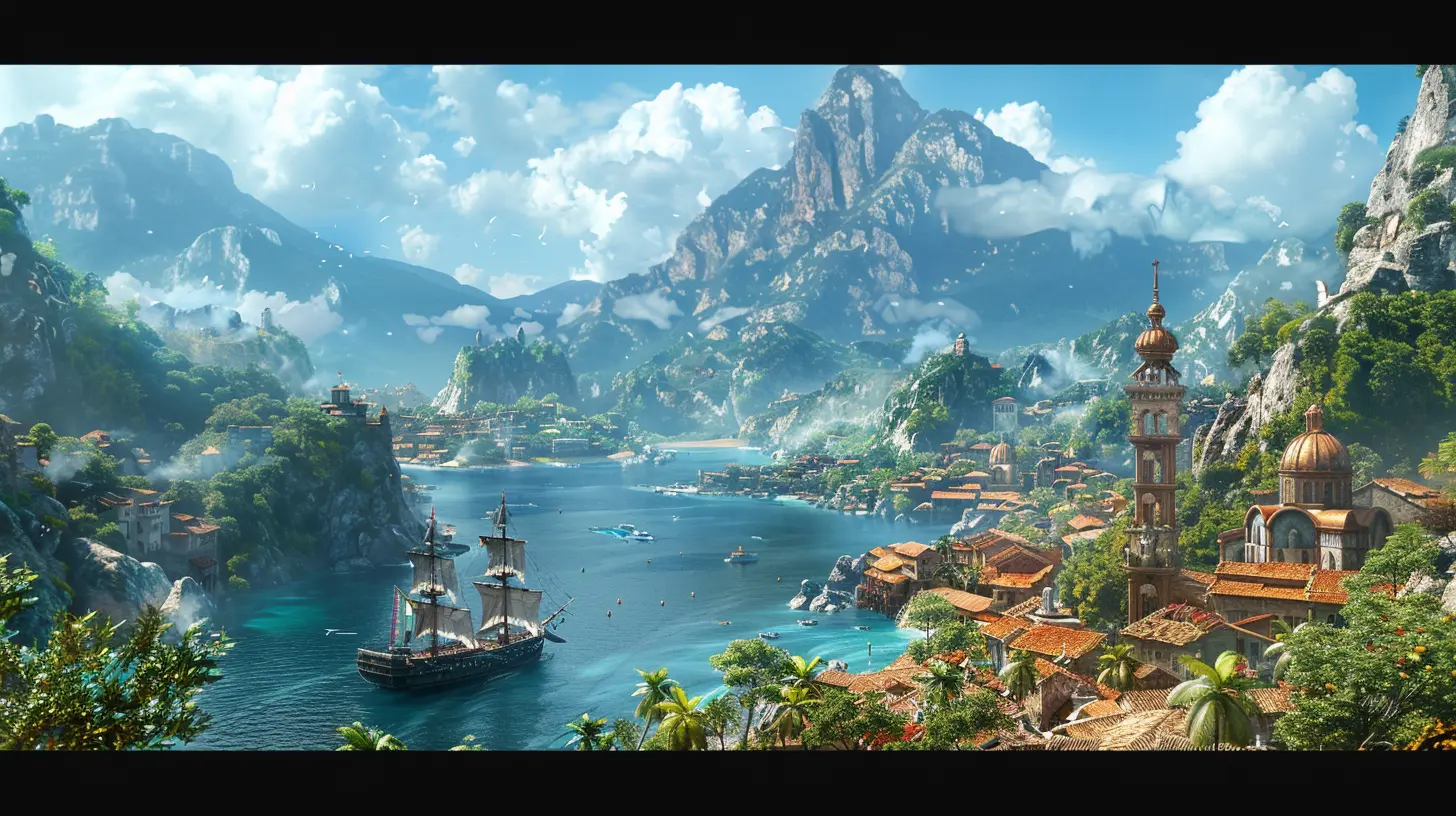
Alright, let’s talk eye candy.Graphics are often the biggest selling point in AAA games. Think ray tracing, dynamic lighting, motion blur, and highly detailed character models. None of this just happens. It’s all made possible by the game engine’s rendering pipeline.
Take Unreal Engine 5, for example. With tech like Nanite and Lumen, developers can create photorealistic environments that look like Hollywood blockbuster sets—without melting your GPU (well, most of the time).
These engines handle:
- Real-time lighting and shadows
- High polygon counts with minimal performance loss
- Seamless level streaming
- Advanced shading and post-processing
Visual fidelity is more than just pretty surfaces. It’s about immersion—making you forget you're playing a game and feel like you're stepping into another world. A solid engine brings that illusion to life.
Physics and Realism: The Unsung Heroes
Ever noticed how characters react to hits in realistic ways? Or how objects fall, bounce, or break depending on their material? That’s physics, baby.Game engines include physics engines (like Havok or PhysX) that simulate real-world behavior. And for AAA games, physics isn’t just a bonus—it’s essential.
Whether it's a collapsing building in "Battlefield" or a car crash in "GTA V," the engine ensures that every motion looks and feels right. These elements may seem like background noise, but they add layers of believability that players subconsciously crave.
Audio Integration: The Invisible Glue
Let’s not forget sound. A good AAA title doesn’t just look great—it sounds incredible. Engines offer tools to spatialize audio, meaning the game can tell where the sound comes from—behind you, above you, to your left, etc.This makes games more immersive and intense. Picture sneaking around an enemy base, and suddenly you hear footsteps behind you. Your heart skips a beat. That’s the magic combo of game engine tech and clever audio design.
AI and NPC Behavior: Making Worlds Feel Alive
What’s an open-world RPG without NPCs that seem like they have lives of their own?The AI systems embedded in game engines are responsible for pathfinding, combat behavior, dialogue trees, and more. They make sure enemies don’t just run at you in a straight line but take cover, flank you, or call for backup.
Advanced engines give designers the flexibility to create believable, reactive characters—which is key in crafting immersive storytelling experiences.
Scalability and Optimization: Keeping Things Smooth
AAA games need to run on multiple platforms—PC, PS5, Xbox Series X, and sometimes even older hardware. That’s no small feat.Game engines provide scalability features that allow games to:
- Adjust resolution and texture quality
- Enable or disable features like ray tracing
- Optimize load times
- Stream assets on the fly
A well-optimized engine ensures players get a smooth experience, regardless of the device they're on. And let's be honest—nobody wants to play a 5 FPS slideshow, even if it looks amazing.
Multiplayer Infrastructure: Not Just Plug and Play
If you thought single-player complexity was intense, multiplayer takes it to another level.Engines help developers build networking code, manage servers, sync player actions, and ensure lag-free gameplay. Whether it's a battle royale with 100 players or a co-op session with a friend, it all hinges on the reliability of the engine’s networking stack.
Without solid multiplayer support, even the most hyped AAA titles risk falling flat—just ask any game with a rocky launch.
Proprietary vs. Commercial Engines: The Big Decision
AAA studios often face a big question: Do we build our own engine, or use a commercial one?Let’s break it down.
Proprietary Engines (In-House Tools)
+ Full control over features+ Can be fine-tuned for specific gameplay needs
+ No licensing fees
But…
- Very expensive to build and maintain
- Slower to adapt to new tech
- Requires dedicated engine teams
Commercial Engines (Like Unreal or Unity)
+ Constant updates and support+ Huge community
+ Time-saving tools out of the box
But...
- Licensing costs (royalties or upfront fees)
- Less control over the core engine
- Might not meet all custom requirements
Many studios find a hybrid approach works best. They start with a commercial engine and build custom modules on top of it to suit their unique game vision.
Time is Money: Why Efficiency Matters
Let’s not forget one of the most practical reasons engines matter—time.AAA games have deadlines, no matter how ambitious the vision. A solid engine speeds up development by offering:
- Visual scripting for non-programmers
- Asset management tools
- Built-in debuggers
- Rapid prototyping features
The faster you can build and test features, the sooner you can polish the final product. And in today's competitive landscape, getting to market efficiently can make or break a studio’s success.
Future-Proofing: Staying Ahead of the Curve
Gaming technology evolves fast. What looks amazing today might look outdated next year. Great engines keep up with the times—whether it's support for virtual reality, machine learning for better AI, or advanced cloud rendering.AAA studios need engines that are not just powerful today but adaptable for tomorrow. Think about how Unreal Engine 5 is already enabling creators to push boundaries we didn’t even know existed a few years ago.
Emotional Connection: Engines Drive Experience
Here’s something that often gets overlooked—emotion.The real goal of any game is to make you feel something. Whether it’s the heartbreak in a tragic cutscene or the rush of adrenaline during a boss fight, engines act as the conduit that channels these emotions through sights, sounds, physics, and interactions.
Without a capable engine, all those storyboards, scripts, and animations would fall flat. It’s like writing a love song and then trying to perform it on a broken guitar.
Final Thoughts: The Unsung Heroes
Game engines might not get the spotlight, but they deserve a standing ovation. They’re the silent partners in every AAA title, empowering developers to dream big and deliver unforgettable experiences.So the next time you're lost in a gorgeously-rendered world or surviving an epic boss fight, tip your hat to the game engine that made it all possible. Because in the world of AAA gaming, engines aren’t just important—they’re everything.
all images in this post were generated using AI tools
Category:
Aaa GamesAuthor:

Avril McDowney