How Player Choice Influences Game Progression
22 July 2026
You know that moment in a game where the screen dims, the music slows, and you have to make a decision—fight or sneak, save the villagers or torch the village, join the shadowy cabal or heroically flip them off? Yeah, that’s the sweet spot. That moment is where games truly come alive. Games these days aren’t just about smashing buttons and memorizing attack combos—they’re about making choices. Real, sometimes gut-wrenching decisions that shape your game like you're molding Play-Doh in high-stakes mode.
So, let’s dive headfirst into the digital chaos and talk about how player choice influences game progression. And no, we’re not just talking about "Choose Your Own Adventure" gimmicks. We're talking complex, butterfly-effect-level, “Oh no, I didn’t mean to start a war with the elves” kind of decisions.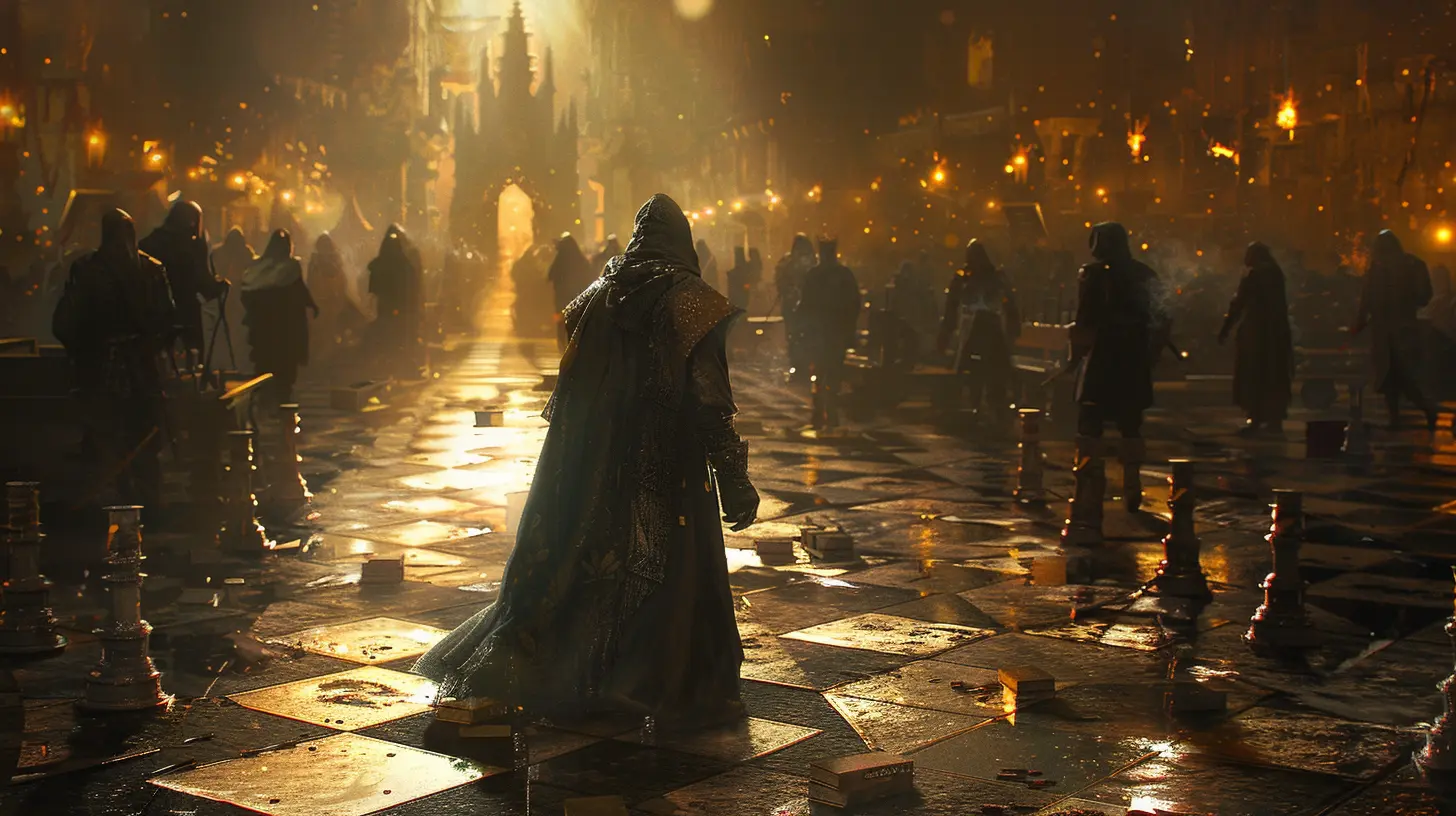
What Is Player Choice, Anyway?
Okay, let’s not overcomplicate it.Player choice is simply the ability for you, the gamer, to shape the narrative, environment, or outcome of a game based on your decisions. It’s like if Mario could decide whether to save the princess or start his own Mushroom Kingdom revolution (which would honestly be epic).
These choices can be as minor as picking a dialogue option or as major as determining the fate of an entire world. The key thing here is that your decision actually matters and shifts the way the game plays out.
Why Should You Care About Player Choice?
Simple answer? Because it gives you control. And who doesn't love control?Games with meaningful player choice feel personal. The world reacts to you. Characters remember how you treated them. The story bends, twists, and sometimes breaks because of one tiny decision you made ten hours ago and totally forgot about.
Not to get all philosophical, but it’s kind of like life. Games with choice mimic the real world, where every action has consequences. That’s what makes them so immersive and so darn addictive.
The Illusion of Choice vs. Actual Choice
Alright, time for a truth bomb.Not all games that say they offer player choice actually do. Some just make you feel like you’re in control, while the story stays on a fixed track. This is what gamers lovingly refer to as the “illusion of choice.”
Imagine you’re choosing between two doors. The left one is labeled “Befriend the dragon,” the right “Slay the dragon.” But no matter which door you pick, ten minutes later, the dragon ends up dead. That’s not real choice. That’s narrative smoke and mirrors.
Now, true choice? That’s when the dragon either becomes your fire-breathing bestie or your final boss, based on your decision. And the world around you reacts accordingly. That’s the good stuff.
Branching Narratives 101: How Games Splinter Their Stories
Games with real player choice usually use something called branching narratives. Think of it like a big ol’ tree—your choices are the branches, and each one leads to a different leaf (or ending… or explosion).The more branches, the more complex the story. Some games have a few big branches and lots of little twigs. Others? They’re like entire forests of “what ifs” and “uh-ohs.”
Classic Examples:
- Mass Effect: Your choices affect entire species, relationships, and the fate of the galaxy across multiple games. Talk about pressure.- The Witcher 3: Geralt’s choices have long-term effects that aren’t immediately obvious. That nice thing you did for that NPC? She might save your life 20 hours later.
- Detroit: Become Human: Every. Single. Decision. Matters. Even whether you pick up a piece of paper can change your entire endgame.
Character Development: It’s Not Just About Kill Count
Ever noticed how the best games let your character grow not just in level, but in personality?Player choice often influences more than just the world—it changes you. Or at least, your in-game persona. Are you the noble savior or the cunning villain? A pacifist wizard or a sword-swinging lunatic?
Games like Dragon Age or Fable reflect those choices. You might start out a wide-eyed farm kid, but after a few sketchy decisions, you’re rocking demon horns and scaring villagers for fun.
It’s like life, but with more lightning bolts and fewer taxes.
Morality Systems: The Digital Devil on Your Shoulder
Some games go the extra mile and give you a morality meter. Think Karma in Fallout or the Paragon/Renegade system in Mass Effect. These systems track your behavior and slap labels on you like “Heroic Paladin” or “Unhinged Warlord.”On one hand, it’s fun to see the consequences laid out so clearly. On the other? It low-key makes every decision feel like a high school exam. “Should I rob this merchant?” Hmm, what would raise my evil stats?
Still, morality systems add flavor, tension, and replay value. They push you to think before pulling the trigger… or at least, before stealing a fictional chicken.
Choice-Driven Gameplay: Not Just Story, But Strategy
Player choice doesn’t always have to be about the story. Sometimes, it's baked right into the gameplay mechanics.Take XCOM, for example. Who you send on missions, who lives or dies, what tech you prioritize—it all has ripple effects. One poor choice, and boom, humanity’s doomed.
Or Darkest Dungeon, where every decision shapes your party's stress levels and psychological stability. It’s like babysitting a band of gothic, emotionally fragile murderers.
These games don't just make you choose—they make you own those choices.
The Butterfly Effect: Small Choices, Big Consequences
Here’s where things get spicy.Some games thrive on the butterfly effect—the idea that a tiny change can lead to massive consequences later.
In Until Dawn, for instance, deciding to take a shortcut or check out a noise can determine whether a character lives or ends up Netflix-worthy horror victim #7. You won’t even know you messed up until it’s way too late.
This unpredictability makes your choices feel weighty. You start second-guessing everything—"Should I open this door? Should I say sorry? Should I put on those cursed shoes?"
Welcome to gaming-induced paranoia. It’s a thrill ride.
Replay Madness: How Choice Fuels Multiple Playthroughs
One of the best things about player-driven games? Replay value.Games like Undertale beg to be played multiple times. The Genocide route vs. the Pacifist route? Totally different experiences. You’ll laugh, you’ll cry, you’ll feel weirdly guilty about pixelated characters.
Knowing that your decisions lead to wildly different outcomes is catnip for curious gamers. Plus, it’s a great excuse to pour another dozen hours into your favorite virtual world. (Not that we need an excuse.)
How Devs Pull It Off (AKA, the Wizardry Behind the Curtain)
Creating games with meaningful player choice isn’t easy. Developers have to map out incredibly complex decision trees, write alternate dialogues, program reactive AI, and craft multiple endings—all while making sure it doesn’t break the game or melt your console.They also have to anticipate what players might do. And if you’ve ever played Skyrim and tried to kill a chicken in public, you know players will always surprise you.
But when it’s done right? You get a game that feels alive, reactive, and tailor-made just for you.
The Flipside: When Too Much Choice Becomes a Problem
Hold up. Let’s keep it real.Too much choice can backfire. Ever been paralyzed by a game’s billion decision options? Like, you sit there staring at your screen for ten minutes trying to pick a dialogue option before rage-quitting and eating snacks instead? Same.
Overwhelming players with choice—especially if the consequences aren’t clear—can lead to decision fatigue. The golden rule? Choices should be meaningful, not just plentiful.
The Future of Player Choice in Games
AI. Procedural storytelling. Emotion recognition (yep, that’s a thing now).Games are getting smarter at reacting to player behavior. Imagine a game that adjusts its storyline based not just on what you do, but how you do it—if you’re aggressive, stealthy, compassionate, or chaotic stupid.
In the future, every playthrough could be 100% unique. The line between game and reality? Getting blurrier by the day. Buckle up, gamer.
So, Does Player Choice Really Influence Game Progression?
In a word? Absolutely.From dialogue trees to full-on world-altering decisions, player choice is the secret ingredient that turns a “meh” game into a legendary one. It gives weight to your actions, depth to your character, and reason to keep playing long after the credits roll.
So next time a game asks how you want to handle a situation, don’t just click the top option. Pause. Think. This is your story.
Now go out there and make some chaos—I mean, make some choices.
all images in this post were generated using AI tools
Category:
Game ProgressionAuthor:

Avril McDowney