The Psychology Behind Our Love for Retro Games
4 April 2026
Let’s take a trip down memory lane. Remember blowing on your NES cartridge to make it work? Or staying up late, hunched over your Game Boy with nothing but the faint green glow lighting up your face? If your heart just fluttered a little, you're not alone. Retro games have a magical grip on us, and it’s not just about nostalgia — there’s actual psychology at play here.
Whether you grew up in the ‘80s and ‘90s or you've recently ventured into pixelated worlds out of curiosity, the love for retro games is real — and it runs deep.
So, why do we keep going back to the old-school stuff, when modern games are graphically stunning and incredibly immersive? Let’s unpack the psychology behind our collective soft spot for retro games.
Nostalgia: The Emotional Anchor
Let’s kick things off with the big one — nostalgia. It's that warm, tingly feeling that wraps around you like an old hoodie. It’s powerful, comforting, and oddly addictive.When we play retro games, we’re not just killing time; we’re time-traveling to simpler days. Maybe it reminds you of playing with your siblings after school or bonding with your best friend over Mario Kart. Those emotional memories get tied up in the pixels and chiptunes, creating a psychological cocktail that’s hard to resist.
The Brain’s Love Affair With the Past
Our brains are wired to romanticize the past — especially when the present feels stressful or uncertain. That’s nostalgia working its magic. It acts almost like an emotional buffer, reducing anxiety and boosting feelings of social connectedness.Retro games become more than just entertainment; they become portals to a time when life felt more manageable. In that way, playing them is a form of self-soothing — it's therapy in 8-bit.
Simplicity That Soothes
Let’s face it — life today is complicated. Between social media, work, and non-stop notifications, our brains are constantly juggling information. That’s where retro games step in like a breath of fresh air. They’re simple.You don’t have to learn 47 different button combinations or sit through a two-hour tutorial just to get started. You press start, you jump, you shoot — that’s it. There’s a beautiful minimalism in their design that makes them incredibly accessible.
When Less Is More
The limited graphics and sound weren’t bugs — they were features. Developers had to get creative, and that forced them to focus on gameplay. That’s why games like Tetris, Pac-Man, and Super Mario Bros. have stood the test of time. They're easy to understand but hard to master — and that keeps us coming back.Simplicity also leads to less cognitive overload. In today's world, that’s golden. You can play for 15 minutes and feel satisfied, rather than getting lost in a 100-hour epic. Sometimes, less really is more.
Achievement and Mastery
You ever beat that one boss that’s been haunting your dreams since 1993? Yeah, that feeling — that’s dopamine doing a happy dance in your brain.Retro games often are hard. Like, brutally hard. But that’s part of their charm. Every level beaten, every high score smashed — it all feels earned.
The Good Kind of Frustration
Retro games challenge you, but in a way that feels fair (most of the time). There's no hand-holding, no checkpoints every 15 seconds. You fail? Start over. Try again. And when you finally succeed, that reward is intensely satisfying.It's the same psychological principle behind why people love puzzles or tough workouts — our brains like being tested and, even more, they love when we overcome those tests. That’s accomplishment in its purest form.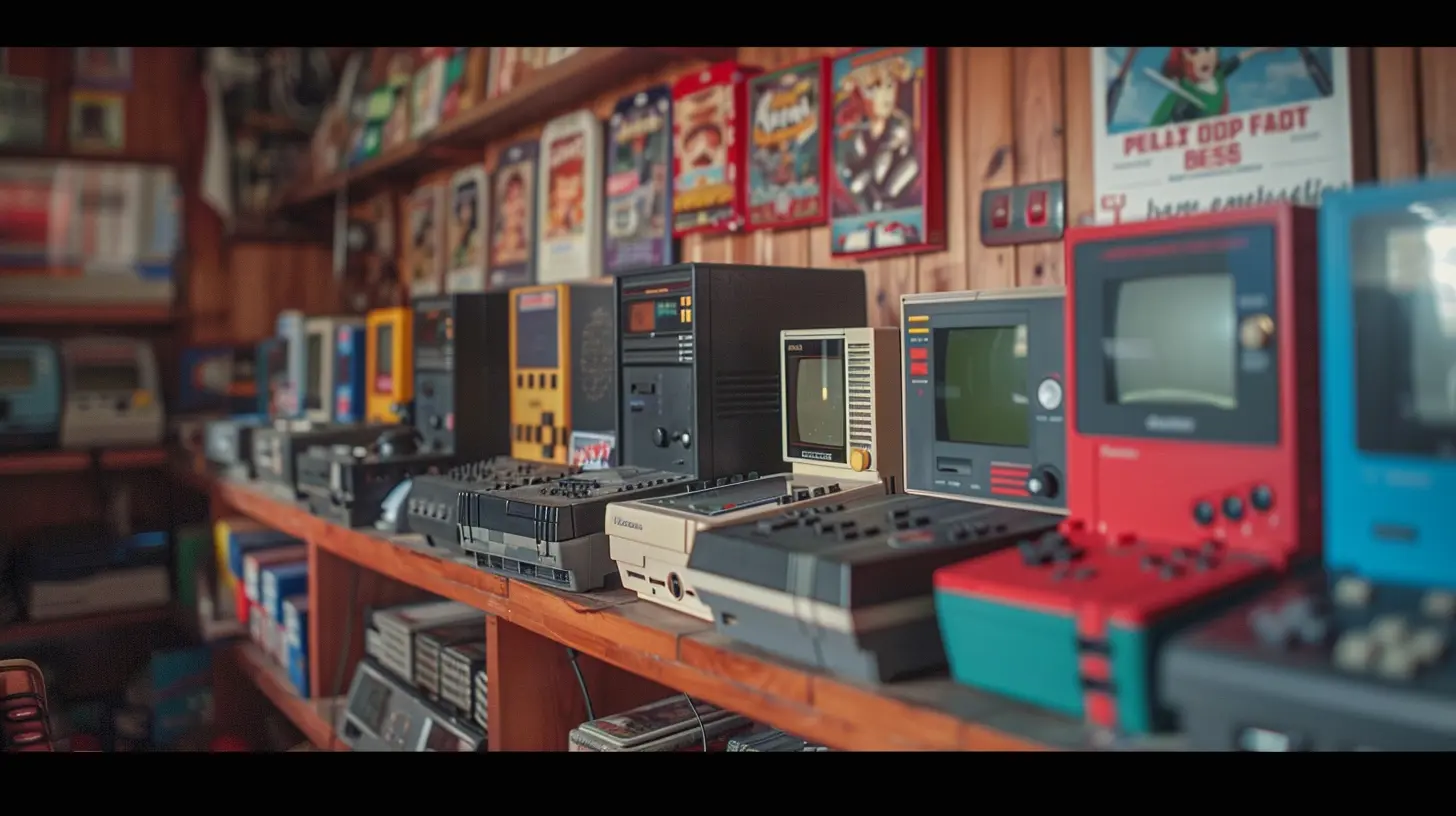
Visual and Audio Cues that Stick
Ever hear a chiptune and immediately get hit with a wave of nostalgia? That’s not a coincidence. Retro games have distinct visual and audio styles that are instantly recognizable and weirdly comforting.The Power of Pixel Art
Pixel art is like visual comfort food. It’s charming, colorful, and full of personality. Those chunky sprites? They fire up your imagination. Because they don’t aim for realism, they leave room for interpretation, making each experience feel uniquely yours.Soundtracks, too, play a massive psychological role. Those catchy loops and blips burn themselves into your memory. You might forget last week’s lunch, but you’ll never forget the Mario theme or the eerie music when your Pokémon’s health is low. Guaranteed.
Community and Culture
Retro games aren’t just games anymore — they’re culture. From online forums to retro gaming conventions, there's a whole subculture built around them. And being part of a community gives us a sense of belonging.Sharing the Experience
Talking about favorite consoles, debating Sega vs. Nintendo, trading cartridges — these are social acts. They create shared experiences and connections. In a way, playing retro games becomes a social currency.And don’t even get me started on speedrunning communities. Watching someone beat Super Mario 3 in under 10 minutes isn’t just impressive — it’s a communal thrill. You’re rooting for them. You’re in it together.
Childhood Imprinting
Let’s get a bit deeper — our childhood memories are incredibly influential. They form foundational beliefs and emotional patterns. So, when you play a game you loved as a kid, it’s like returning to who you were before life got complicated.It’s like comfort food for the soul. A way to re-live the good times, even if just for a few moments.
The First Impression Factor
There's also the idea that the first version of something we experience tends to leave the biggest impression. The first video game we played? Likely a retro one. And just like your first favorite song or first movie that made you cry, it sticks with you forever.And when newer games try to replicate that feeling but don’t quite hit the same vibe? That’s why. Your brain is forever imprinted with those early experiences.
Scarcity Breeds Value
Retro games are finite. You can’t just log into Steam and download them (well — unless you’re using emulators, but that’s a different can of worms). The tangible nature of cartridges, the thrill of finding a rare copy at a flea market — it all adds to the excitement.Digital vs. Physical
Unlike digital downloads, holding a physical cartridge or controller grounds you in the experience. It’s tactile. It’s real. And because these items become harder to find over time, their perceived value increases — not just monetarily, but emotionally.That scarcity creates a sense of treasure-hunting. And who doesn’t love the thrill of the hunt?
Reinvention and Legacy
Many modern games are inspired by retro ones — some are even direct remakes. Why? Because good design never goes out of style. Developers and gamers alike know that the classics got a lot of things right.Passing the Torch
Retro games are also how many of us introduce the next generation to gaming. Whether it’s showing your kids Sonic the Hedgehog or letting your friends try out your SNES, it’s about sharing a legacy. That emotional connection runs deep and creates a bridge across generations.The Indie Resurgence
Interestingly, a lot of modern indie games borrow retro aesthetics — think Shovel Knight, Celeste, or Undertale. These games show that the retro style still resonates, even in a modern context.Why? Because it taps into all the psychological points we just talked about — simplicity, challenge, style, and nostalgia — while infusing it with fresh ideas. It’s the best of both worlds.
Final Thoughts: It’s More Than Just Games
At the end of the day, our love for retro games isn’t just about pixels and controllers. It’s about who we were, who we are, and how we connect with others. It’s about the feelings these games evoke — joy, frustration, triumph, wonder.Retro games are timeless not because they haven’t changed, but because they’ve changed us. They remind us that even in a high-definition world, sometimes the most meaningful things come in low res.
So, next time you fire up your old console or crack open an emulator, know that you’re not just playing a game — you’re reliving a beautiful, pixelated piece of your own psychology.
all images in this post were generated using AI tools
Category:
Classic GamesAuthor:

Avril McDowney
Discussion
rate this article
2 comments
Amira McCarty
Retro games offer us a nostalgic escape, reminding us of simpler times while igniting joy and camaraderie with friends. Embracing these classics not only fuels our passion for gaming but also connects us across generations. Let's celebrate the timeless magic they bring to our lives!
April 7, 2026 at 3:06 AM
Avril McDowney
Absolutely! Retro games do tap into that nostalgia, bringing people together and reminding us of the joy of simpler times. It's a beautiful way to connect across generations.
Shannon Lambert
Fascinating exploration! It's intriguing how nostalgia and simpler gameplay mechanics tap into our emotions. I’m curious about how these elements impact new game design and player engagement today.
April 4, 2026 at 2:49 AM
Avril McDowney
Thanks for your insights! Nostalgia really shapes new game design, guiding developers to blend classic mechanics with modern elements for deeper player engagement.