The Legacy of Iconic Game Developers from the Classics
22 May 2026
Video games didn’t just magically become the billion-dollar industry they are today. Nope — the roots of gaming were built by creative geniuses who took huge risks, toyed with new ideas, and in many cases, worked with insanely limited technology. They didn’t have engines like Unreal or Unity. Most of them were coding straight from scratch, often with nothing more than basic hardware, massive coffee intake, and raw passion.
Today, let's rewind the cartridge and talk about those legends. The game developers who helped shape the gaming universe with timeless classics. Their legacy lives on in every triple-A release, every indie hit, and every pixel of nostalgia we still geek out over.

What Makes a Game Developer "Iconic"?
First off, what even defines an iconic developer? We're not just talking about popular names — we’re talking about the minds who fundamentally changed how we think about games. These guys and gals influenced game design, storytelling, technology, and even entire genres.Think of them like the rockstars and directors of the gaming world. They didn't just make games. They created experiences that resonated for decades.
So, buckle in. We're diving deep into the pixelated past and spotlighting the developers whose names should be sung in the halls of gaming Valhalla.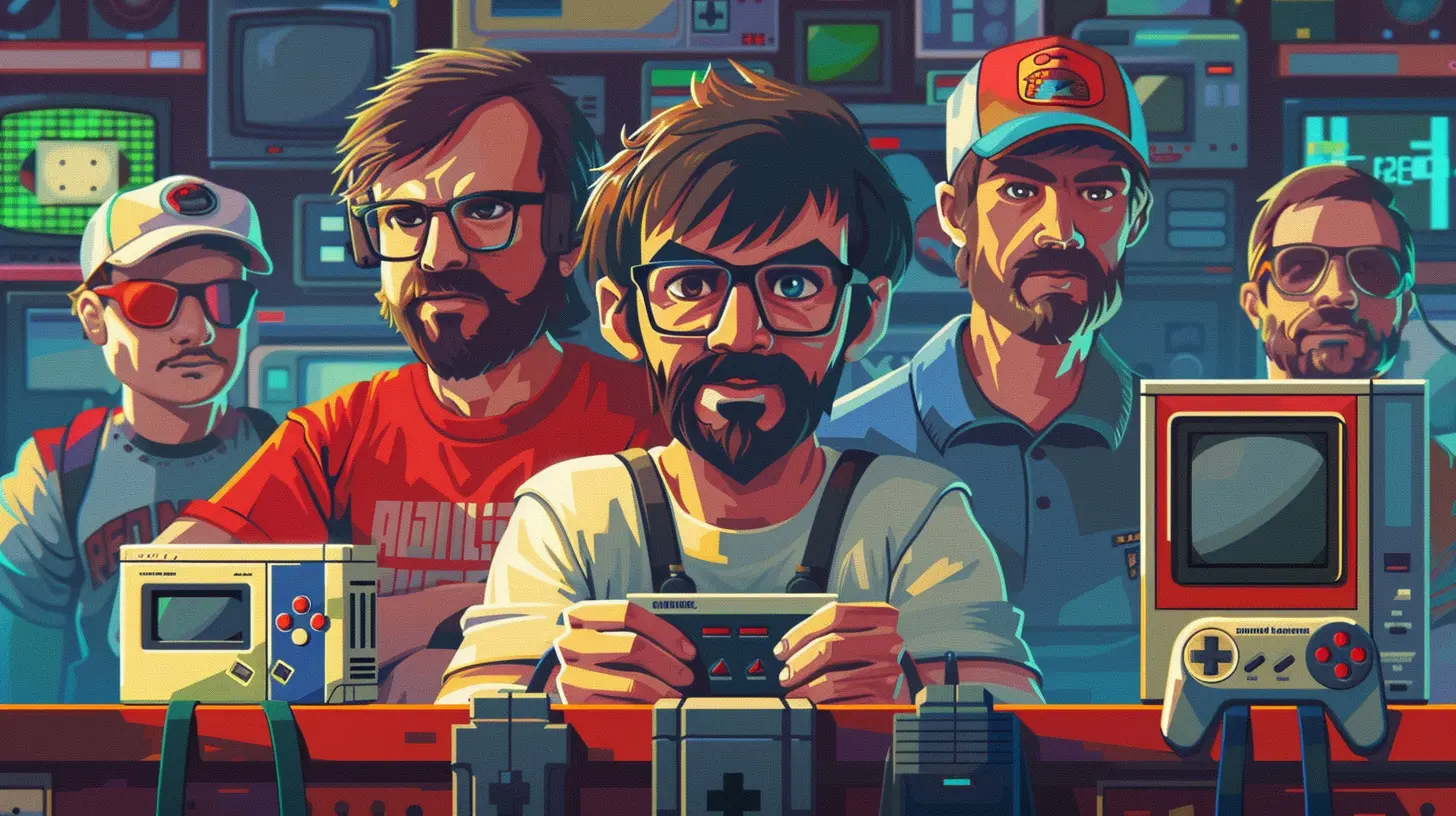
1. Shigeru Miyamoto – The Father of Modern Gaming
Let’s not kid ourselves — no list like this exists without Shigeru Miyamoto, the creative mind behind some of the most beloved franchises of all time: Super Mario, The Legend of Zelda, and Donkey Kong.The Magic He Created
Miyamoto didn’t just make games. He made worlds. When he introduced Mario to the world in the early '80s, he wasn't creating just a platformer — he was laying down the blueprint for what fun felt like in gaming.Zelda, on the other hand, taught us that gaming could be an adventure. That you could get lost in a completely different world and live out your own story.
His Legacy
He's still with Nintendo, guiding new generations of developers. His influence is everywhere — from the design philosophy of indie games to the polish of major studio releases. If game design were a language, Miyamoto would be the inventor of its grammar.
2. Hideo Kojima – The Storyteller and Visionary
Hideo Kojima is to gaming what Christopher Nolan is to film — complex, ambitious, and not afraid to get weird.Metal Gear Solid Changed the Game (Literally)
With the original Metal Gear and later Metal Gear Solid on the PlayStation, Kojima showed us that storytelling in games could rival Hollywood. Cinematic cutscenes, deep plots, unforgettable characters — it was all there.And who could forget iconic lines like "Snake? SNAAAAAKE!" or the mind-bending boss fight with Psycho Mantis that read your memory card?
His Legacy
Kojima turned the "video game director" into a recognized creative role. His focus on blending storytelling with gameplay inspired thousands of developers.Even today, people still debate his games (looking at you, Death Stranding). Love him or not, he pushed the boundaries of what's possible in a video game.
3. Sid Meier – The King of Strategy
If you're into strategy games, then you owe a huge thank you to Sid Meier. He's the brain behind the Civilization series — a genre-defining set of games that gave us the thrill of building kingdoms from the Stone Age to the Space Age.Why He’s a Legend
Sid Meier didn't just make a game. He gave us a sandbox with almost infinite replayability. The famous quote "Just one more turn…" — yeah, that’s because of Meier. His design philosophy always emphasized player choice and meaningful decisions over flashy graphics.His Legacy
Meier helped cement turn-based strategy as a genre worth exploring. His work paved the way for games like Age of Empires, XCOM, and even mobile hits like Clash of Clans. Civilization alone has inspired millions of players and aspiring devs.4. John Carmack and John Romero – The Revolutionaries of 3D Gaming
The dynamic duo behind id Software, Carmack and Romero, literally changed how games were played — and seen. Without them, we wouldn’t have first-person shooters as we know them today.The FPS Boom
With Wolfenstein 3D, Doom, and Quake, they didn't just create iconic games — they invented an entire genre. These weren't just games; they were cultural moments. LAN parties, modding communities, competitive gaming — it all started here.Their Impact
Carmack was the tech wizard. He built engines that powered not just id’s games but licensed to hundreds more. Romero was the design rocket — charismatic, edgy, and full of bold ideas. Together, they laid the groundwork for games like Call of Duty, Halo, and Half-Life.5. Roberta Williams – The Queen of Adventure Games
When people talk about early adventure games, they often leave out Roberta Williams. That’s a mistake. She’s one of the key figures behind King’s Quest and co-founder of Sierra On-Line.Pioneering Narratives and Visuals
In the 1980s, games were mostly text or simple visuals. Williams led the charge toward fully illustrated, animated worlds where players could see the story unfolding. Her work combined puzzles, humor, and heartfelt storytelling.Her Influence
Sierra’s titles — like Gabriel Knight, Space Quest, and Leisure Suit Larry — were genre-defining. Roberta Williams blazed a trail for female developers and helped establish video games as a legitimate storytelling medium.6. Yu Suzuki – The Arcade Mastermind
Yu Suzuki, the man who gave us OutRun, Virtua Fighter, and the ambitious Shenmue, was Sega’s secret weapon in the console wars.The Tech and the Vibes
Suzuki wasn’t just making fun games — he was pushing the limits of technology. Virtua Fighter was one of the first 3D fighting games. Shenmue introduced open-world mechanics and real-time day/night cycles before they were even a thing.His Legacy
Many modern games owe a ton to Suzuki. The way today’s open-world games work? The immersive details? Yeah, a lot of that started here. Suzuki’s creations were ahead of their time and influenced generations of game designers.7. Richard Garriott – The Lord of (Game) Worlds
Better known as Lord British, Richard Garriott is the creative force behind the Ultima series.Innovating RPGs Before They Were Cool
Ultima wasn’t just a game—it was a movement. Before open-world RPGs became mainstream, Garriott was experimenting with morality systems, large explorable maps, and deep lore.What He Left Behind
Without Garriott, we might not have Skyrim, The Witcher, or Mass Effect. His influence on Western RPGs is profound. He showed us that games could have consequences, that your choices mattered, and that players deserved more than cookie-cutter quests.Why Their Legacy Still Matters Today
Ever notice how so many modern games are "spiritual successors" to these classics? That’s not nostalgia talking — it’s legacy in action.The influence of these developers is embedded in game mechanics, storytelling techniques, design philosophies, and even business models. Whether it's open-world freedom, branching narratives, or competitive multiplayer — these were all ideas pioneered decades ago.
And guess what? New developers are standing on their shoulders. Every dev who opens Unity or Unreal today is continuing the story these legends started.
Honorable Mentions
Let’s not forget others who’ve left their marks:- Will Wright – Creator of SimCity and The Sims
- Peter Molyneux – Known for ambitious concepts like Fable and Black & White
- Ken Levine – Mind behind BioShock
- Toru Iwatani – The classic Pac-Man designer
- Gabe Newell – The Valve wizard behind Half-Life, Portal, and Steam itself
These developers also changed the industry in amazing ways and absolutely deserve their flowers.
Final Thoughts
Gaming didn’t evolve overnight. It took dreamers, tinkerers, rebels, and visionaries. The names we've talked about weren’t just making "products" — they were crafting experiences that shaped our childhoods and continue to inspire millions.The next time you boot up a game and get lost in a world for hours, take a moment to thank the pioneers. Without them, we’d still be stuck playing Pong.
So—in a way—these developers are our final bosses. And we’ll gladly face them again and again, one level at a time.
all images in this post were generated using AI tools
Category:
Classic GamesAuthor:

Avril McDowney
Discussion
rate this article
2 comments
Eva Lozano
The influence of iconic game developers extends beyond entertainment; they shaped entire cultures and inspired creativity. Their innovations pushed boundaries, transforming gameplay into a form of art. Reflecting on their legacies reminds us of the power of imagination and the endless possibilities that lie ahead in gaming's evolving landscape.
July 6, 2026 at 3:00 PM
Korian Peterson
What a delightful trip down memory lane! These classic developers truly shaped gaming history. Excited to see where it goes next!
June 1, 2026 at 4:36 AM
Avril McDowney
Thanks for your thoughts! It's amazing to reflect on their impact and imagine the future of gaming.