The Arcade Machines That Changed Gaming Forever
1 June 2026
Ah, arcades. Remember the electric buzz of neon lights, the sound of coins clinking into machines, and the furious mash of buttons as you fought for the high score? Whether you're a seasoned gamer or just someone with a penchant for nostalgia, there’s no denying the impact of arcade machines on the gaming universe. Before sleek consoles and sprawling open worlds, there were these towering cabinets standing proudly in pizza parlors, malls, and dimly lit arcades.
These machines weren’t just time-killers—they were groundbreakers, culture-shifters, and in many ways, the godfathers of modern gaming. So, let’s hop on this nostalgia-fueled rollercoaster and talk about the arcade machines that changed gaming forever.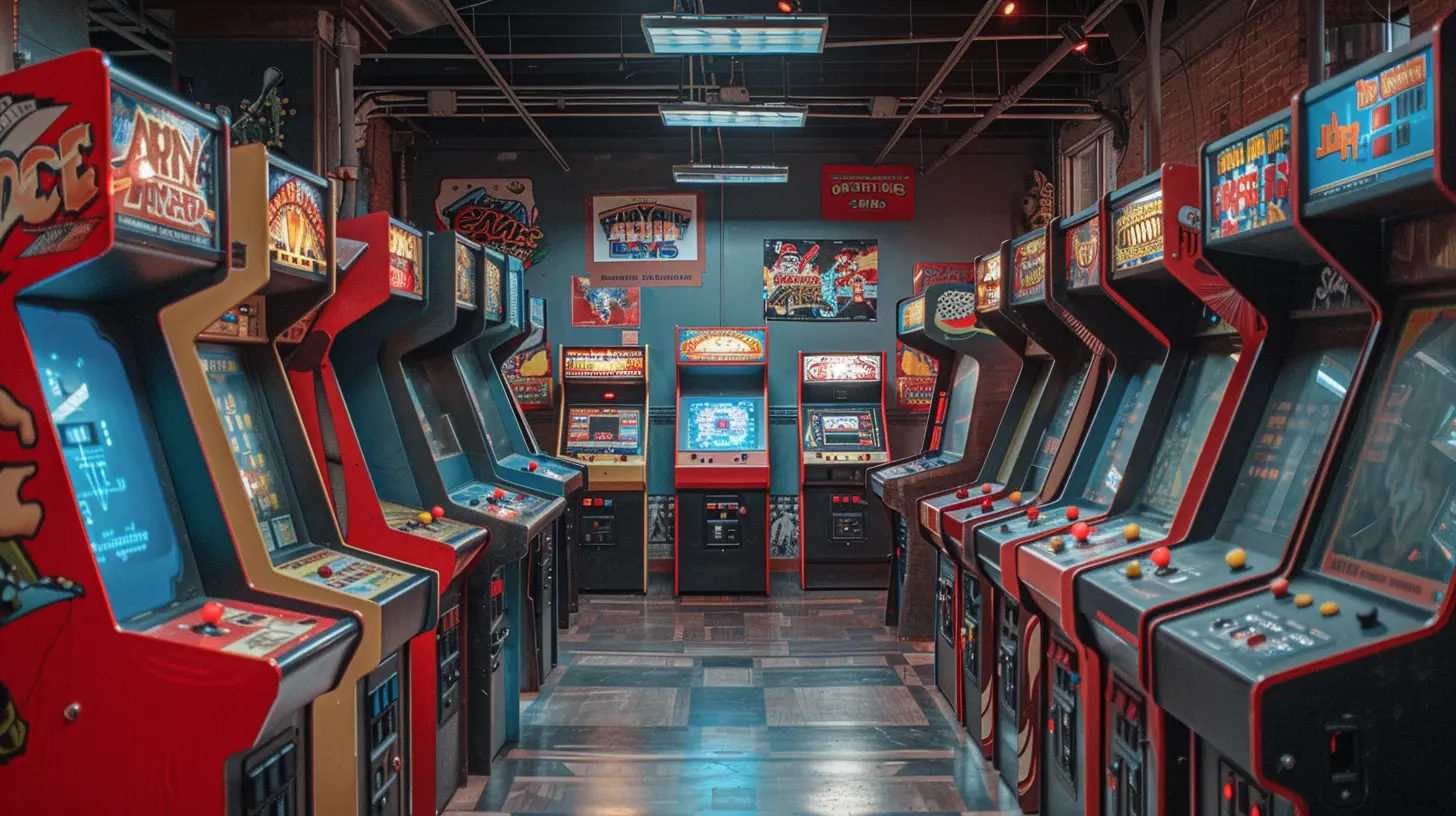
The Golden Age of Arcades (Late '70s to Mid '80s)
Before we dive into the all-stars, let’s set the stage. The golden age of arcade games marked a period where technology met imagination in a perfect storm of pixelated wonder. From 1978 to around 1984, arcade machines flourished in popularity, innovation, and sheer coolness factor.Game developers were like rock stars, and every new machine felt like unwrapping a mystery gift. Now, let’s meet the legends.
1. Pong (1972) – The Game That Started It All
Let’s kick things off with the granddaddy of arcade games—Pong. Created by Atari, this simple yet ridiculously addictive table-tennis game laid the foundation for the gaming industry.Why It Mattered:
- First commercially successful arcade video game.
- Showed the world that interactive electronic entertainment could be profitable.
- It was so popular that machines regularly broke from being jammed with quarters. (Not a bad problem to have, right?)
Pong wasn’t flashy by today’s standards, but it was groundbreaking. Without Pong, who knows if gaming would've ever caught on the way it did?
2. Space Invaders (1978) – The Alien-Battling Phenomenon
When Space Invaders hit the scene, it was like the Beatles arriving in gaming form—utter chaos and excitement. Players were captivated by its simple concept: shoot alien invaders before they reached the bottom of the screen.Why It Mattered:
- Introduced the concept of high scores—cue competitive gameplay.
- Popularized the “wave” gameplay structure.
- Became a pop culture icon basically overnight.
It was also one of the first games where players felt pressure… those aliens got faster the fewer there were. Panic mode: activated.
3. Pac-Man (1980) – The Yellow Munching Superstar
Can you even talk about arcade history without mentioning Pac-Man? With his simple design and endless appetite, Pac-Man became a global superstar.Why It Mattered:
- First game to appeal to both male and female audiences.
- Created a mascot character that transcended gaming.
- Introduced cut-scenes and a more character-based approach to games.
And let’s be real—every one of us has imitated that “wakka wakka” sound. Don’t lie.
4. Donkey Kong (1981) – The Birthplace of an Icon
Before he was leaping over turtle shells, Mario was just a mustachioed carpenter trying to save a damsel from a giant ape. Donkey Kong turned the platformer genre into a household favorite.Why It Mattered:
- Introduced Mario (then called Jumpman), now the face of gaming.
- Brought narrative and characters into arcade gameplay.
- Showed that games could be fun and tell a story.
If gaming had a Mount Rushmore, Donkey Kong’s banana-chucking mug would be up there.
5. Galaga (1981) – Space Combat Level: Addictive
Galaga wasn't just a game—it was a digital addiction that saw players pour hours and quarters into its fast-paced space shooter action.Why It Mattered:
- Added power-ups and “dual fighter” mechanics.
- Precise controls and challenging gameplay kept players coming back.
- Showed that a sequel (to Galaxian) could be better than the original.
If you’ve ever zoned out while dodging pixelated bullets, Galaga probably had something to do with it.
6. Street Fighter II (1991) – The Fighting Game Revolution
Now we're talkin'. When Street Fighter II hit arcades, it didn’t just raise the bar—it roundhouse kicked it into space.Why It Mattered:
- Popularized the competitive fighting game genre.
- Introduced character select and unique fighting styles.
- Encouraged multiplayer competition and birthed local arcade legends.
You weren’t just playing a game. You were becoming Ryu or Chun-Li, staring down your friend like it was the final bout in a martial arts epic.
7. Mortal Kombat (1992) – Finish Him!
If Street Fighter II was the classy pioneer, then Mortal Kombat was the rebellious cousin who showed up in a leather jacket and made jaws drop.Why It Mattered:
- Featured digitized actors and ultra-violence.
- Introduced fatalities and over-the-top finishing moves.
- Led to the creation of the ESRB rating system.
We’ve all done the "Fatality!" voice at some point, haven’t we? No shame.
8. Dance Dance Revolution (1998) – Where Gaming Met Cardio
Ah, Dance Dance Revolution—where rhythm met reflexes and you got a mini workout while chasing scores.Why It Mattered:
- Combined physical movement with gameplay.
- Gave birth to a new genre of music and rhythm games.
- Became a social gaming phenomenon, especially in arcades and parties.
Let’s not pretend it wasn’t intimidating watching someone absolutely demolish a song on Expert mode while you struggled on Beginner.
9. Time Crisis (1995) – Duck, Shoot, Reload!
Time Crisis introduced a new kind of interactivity. This wasn’t just aim and shoot—it brought light-gun mechanics to the next level with its iconic foot pedal for cover.Why It Mattered:
- Blended light-gun shooting with tactical gameplay.
- Introduced cooperative play and story progression.
- Became a staple of arcade shooter experiences.
There was something so cool about ducking for cover and jumping back in at the perfect time, feeling like a total action hero.
10. NBA Jam (1993) – Boomshakalaka!
Before sports games got ultra-realistic, there was NBA Jam, a zany, over-the-top basketball game with flaming dunks and hilarious commentary.Why It Mattered:
- Made sports gaming approachable and fun for everyone.
- Introduced iconic catchphrases and wild gameplay mechanics.
- Paired real NBA licenses with arcade-style exaggeration.
This game didn’t just let you play basketball—it let you feel like a basketball god.
Honorable Mentions – The Unsung Heroes
Not every game could make the main list, but some deserve a shout-out:- Asteroids – Vector graphics never looked so good.
- Defender – Complex and ahead of its time.
- Frogger – Teaching us timing and patience, one lane at a time.
- Punch-Out!! – Precursor to epic boxing titles.
- The Simpsons Arcade Game – Family fun meets beat-’em-up greatness.
Arcades Today: Not Dead, Just Evolved
Sure, arcades aren’t the cultural juggernauts they once were, but they’re far from extinct. Retro arcade bars, online emulators, and even arcade cabinets in malls and theaters keep the spirit alive. Today’s throwback trend has spawned new interest in these classic games, sometimes even more intense than back in their heyday.Modern indie games borrow heavily from these pioneers, proving that great gameplay never goes out of style.
Final Thoughts: More Than Just Quarters and Pixels
These machines weren’t just games; they were experiences. They created friendships (and rivalries), sparked creativity, and laid the pixelated pathways for today’s multi-billion-dollar gaming industry.Next time you pass a dusty old arcade cabinet, tip your hat. Because behind that chunky joystick and CRT screen lies a legacy that changed the world.
all images in this post were generated using AI tools
Category:
Classic GamesAuthor:

Avril McDowney
Discussion
rate this article
1 comments
Kira Wells
Arcade machines were more than entertainment; they sparked innovation and community, shaping the gaming landscape in ways we still feel today.
June 4, 2026 at 2:32 AM